
Arkansas has 75 counties, with 0 classified as EPA Zone 1 (highest risk). With an average radon level of 9.48 pCi/L, Arkansas state testing data reveals significantly elevated risks across multiple counties. Testing is highly recommended.
Arkansas is the 29th largest state in square miles, and the 32nd most populous in the entire country. Linda Gundersen of the US Geological Survey filed a report concerning the geologic radon potential assessment for Arkansas. 1,535 homes statewide were tested during the winter of 1990-91. The average indoor radon for the state was 1.2 pCi/L and 5.3 percent of the homes tested had indoor \levels exceeding the recommended action limit of 4 pCi/L.
The state does maintain a Radon program, with a wide variety of resources and information available on the Arkansas Geological Survey website.
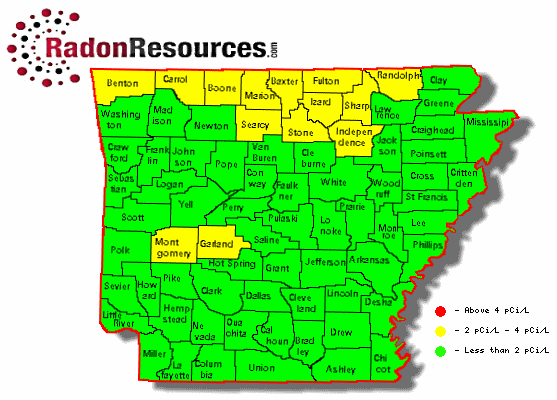
Explore radon data organized by metro region, including average levels, hotspot cities, and local mitigation professionals.
Cities with the most user-submitted radon test data, ranked by number of submissions.
| City | Avg User Radon Level | Submissions |
|---|---|---|
| Hot Springs Village | 11.60 pCi/L | 5 |
| Bentonville | 4.00 pCi/L | 4 |
| Bella Vista | 13.67 pCi/L | 3 |
| Little Rock | 7.00 pCi/L | 1 |
All 75 Arkansas counties with their EPA radon zone classification and user-submitted average radon levels.
Browse radon data for individual cities across Arkansas. Each city page includes user-submitted radon levels, local contractors, and mitigation resources.