
Alabama has 67 counties, with 13 classified as EPA Zone 1 (highest risk). With an average radon level of 6.79 pCi/L, Alabama state testing data reveals significantly elevated risks across multiple counties. Testing is highly recommended.
Alabama is the 30th most expansive state and the 23rd most populous. From December 1986 through May 1987, the State Department of Public Health and the EPA conducted studies to determine the probability of elevated radon levels in Alabama homes. These studies consisted of 789 tests that were carried out in residences of volunteers throughout the State. Additionally, a random sampling of residences resulted in an additional 1326 tests. Nearly 2500 of those tests have been 4.0 pCi/l or higher. Of those, 245 have been between 20 and 100 pCi/l, and 9 have exceeded 100 pCi/l. As more test results surface, it has become apparent that radon is a significant problem everywhere in Alabama.
The state also has a very commendable Radon program, with a wide variety of resources and information available on the official site.
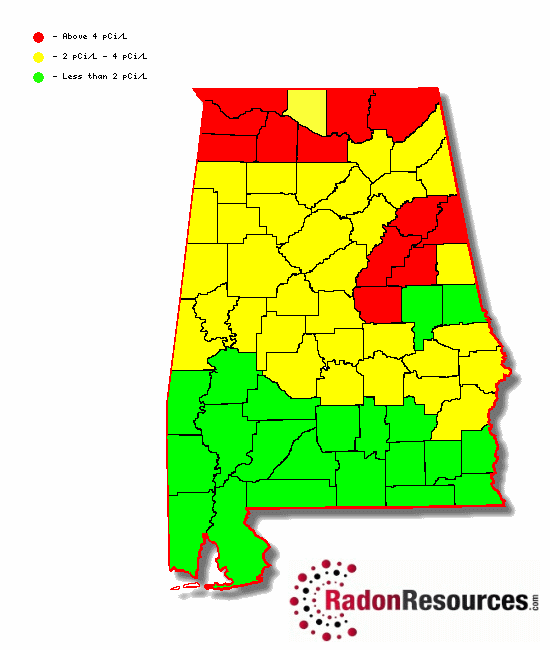
Explore radon data organized by metro region, including average levels, hotspot cities, and local mitigation professionals.
Cities with the most user-submitted radon test data, ranked by number of submissions.
| City | Avg User Radon Level | Submissions |
|---|---|---|
| Huntsville | 9.00 pCi/L | 2 |
| Birmingham | 7.00 pCi/L | 2 |
| Madison | 4.00 pCi/L | 1 |
All 67 Alabama counties with their EPA radon zone classification and user-submitted average radon levels.
Browse radon data for individual cities across Alabama. Each city page includes user-submitted radon levels, local contractors, and mitigation resources.