
Texas has 253 counties, with 0 classified as EPA Zone 1 (highest risk). With an average radon level of 7.42 pCi/L, Texas state testing data reveals significantly elevated risks across multiple counties. Testing is highly recommended.
Texas is the second largest state in terms of size and the first largest out of the 48 contiguous states. It also happens to be the second most densely populated state in the entire US with a population totaling over 26.4 million.
Texas does have an active radon program, dedicated to educating citizens about the risks associated with the deadly gas. You can find more information on Radon, testing and mitigation at the official page.
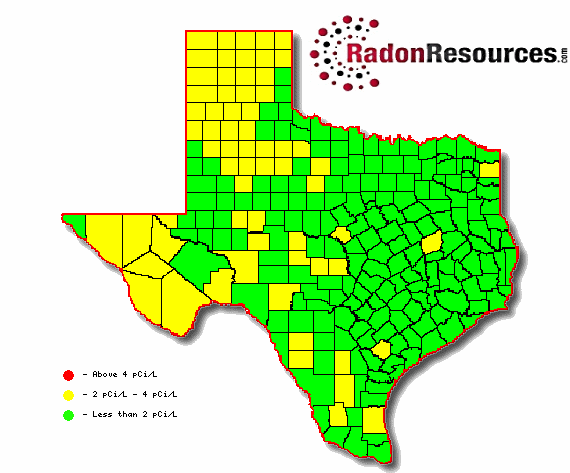
Explore radon data organized by metro region, including average levels, hotspot cities, and local mitigation professionals.
Cities with the most user-submitted radon test data, ranked by number of submissions.
| City | Avg User Radon Level | Submissions |
|---|---|---|
| Lubbock | 12.67 pCi/L | 9 |
| San Antonio | 6.57 pCi/L | 7 |
| Austin | 6.14 pCi/L | 7 |
| Dallas | 8.00 pCi/L | 5 |
| Abilene | 4.50 pCi/L | 2 |
| Houston | 3.50 pCi/L | 2 |
| Plano | 6.00 pCi/L | 1 |
| Frisco | 3.00 pCi/L | 1 |
| Nacogdoches | No submissions | 0 |
All 253 Texas counties with their EPA radon zone classification and user-submitted average radon levels.
Browse radon data for individual cities across Texas. Each city page includes user-submitted radon levels, local contractors, and mitigation resources.