My Neighbor Has High Radon: Should I Test My Home?
My Neighbor Has High Radon: Should I Test My Home?
Yes. If a neighbor’s home tested high for radon, testing your own home is worth doing, and soon. A nearby elevated result is a genuine reason to pay attention, because homes in the same area often sit on similar soil and rock. What it can’t do is tell you your own radon level. Radon varies a lot from one house to the next, and the EPA is explicit that you can’t predict a home’s level from neighborhood measurements. Your reading could come back higher than your neighbor’s, lower, or well within a safer range. The only way to know is to test the air inside your own home.
This article explains what a neighbor’s result actually signals, why two houses on the same street can measure so differently, how to think about the odds for your home, and the practical steps to test.
What your neighbor’s high result actually tells you
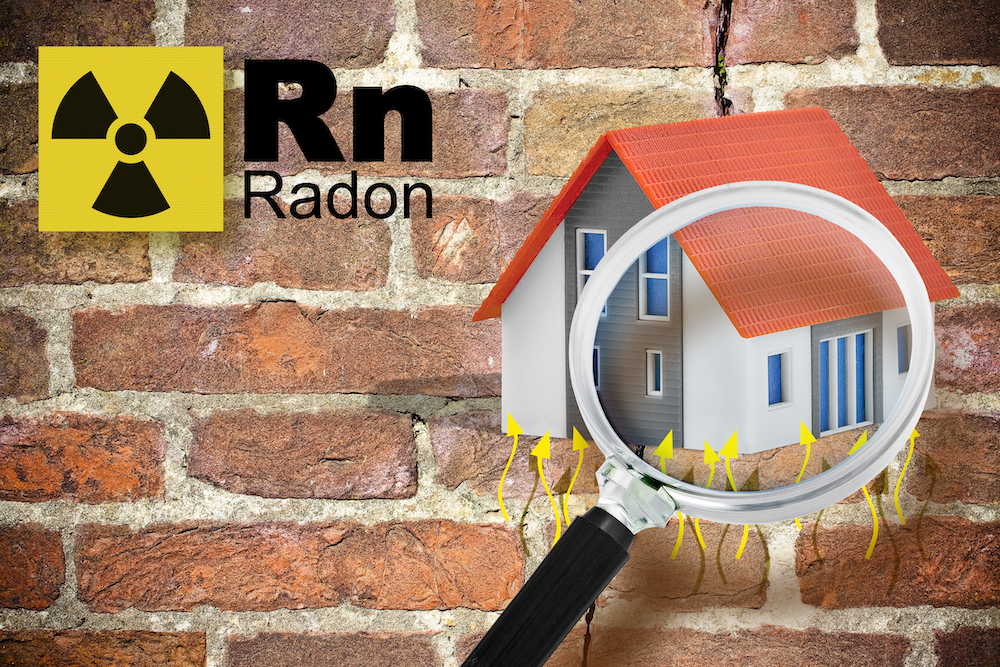
Radon is a naturally occurring radioactive gas produced as uranium in soil and rock breaks down. It has no color, odor or taste, and it seeps up through the ground and into homes through cracks in the foundation, gaps around pipes, sump pits, crawl spaces, and sometimes through well water. Because the source is the ground itself, homes clustered together frequently share the same underlying geology.
So a neighbor’s elevated reading is useful information. It confirms that radon-producing material is present in your area and that at least one home nearby has drawn enough of it indoors to reach an elevated level. That’s a reasonable prompt to test, in the same way you’d take a leak in a neighbor’s basement as a cue to check your own after heavy rain.
What the result is not is a measurement of your home. Shared geology raises the plausibility that radon is around; it does not set your indoor concentration. That number depends on your specific home.
Why two homes next door can measure very differently
Radon levels can vary greatly from home to home, and even levels next door can be very different. Several things drive that gap:
- Foundation type and condition. A home with a basement, a slab, or a crawl space each interacts with soil gas differently. The number, size and location of cracks and openings in the foundation change how much radon can enter.
- How the house sits on the soil. Small differences in soil composition, moisture and permeability directly under one home versus another affect how easily gas moves upward.
- Construction and air pressure. Homes tend to pull air (and soil gas) up from below through what’s often called a stack effect. Heating systems, tightness of construction, and ventilation all shift how strong that pull is.
- Water source. A home on a private well can take on radon from groundwater, adding a pathway a neighbor on municipal water may not have.
Any one of these can make a meaningful difference, and they stack. That’s why the EPA advises that you cannot predict radon levels based on state, local or neighborhood measurements, and why two houses built the same year on the same street can land on opposite sides of the action level.
How likely is it that your home is affected too?
There isn’t an honest way to turn a neighbor’s reading into a precise probability for your home. Anyone who claims a nearby high result means your home is “almost certainly” high is overstating what the data supports. What can be said fairly is more modest: an elevated result nearby suggests your area has radon potential, which makes finding an elevated level in other homes there more common than it would be in a low-radon region. It raises the reason to check, not a verdict on your home.
It also cuts both ways. Plenty of homeowners test after a neighbor’s scare and find their own level is fine. Others test expecting to be safe because a neighbor was, and find the opposite. Neither outcome is predictable in advance, which is exactly why testing exists. If you’d like a sense of what homes in your region have reported, you can browse user-submitted radon readings near you, keeping in mind those are voluntary, unverified results and not a substitute for testing your own home.
How to test your home
Testing is inexpensive, and you can do it yourself or hire a professional. In the United States, radon is measured in picocuries per liter of air, written pCi/L. You have three main options:
- Short-term test kits stay in place from about two to seven days and give you a quick first look. Charcoal-based kits are the most common and least expensive.
- Long-term test kits (often alpha-track devices) measure for 90 days to a year and give a more reliable picture of your typical exposure, because radon rises and falls with weather, seasons and how the home is used.
- Continuous radon monitors are reusable electronic devices that show ongoing readings and trends.
Whichever you choose, place the test in the lowest level of the home you regularly use, keep windows and outside doors closed as much as normal living allows during a short-term test, and follow the kit’s instructions on placement and timing. Our radon test kit comparison walks through the tradeoffs, and the radon testing guide covers how the process works start to finish.
If you’d rather not handle it yourself, a certified radon measurement professional can test the home and interpret the result for you. This is often the route buyers and sellers take during a real estate transaction, when timing and documentation matter.
What your result means, and what to do next
The EPA recommends fixing a home when the radon level is at or above 4 pCi/L, and it recommends that homeowners also consider taking action between 2 and 4 pCi/L. No level of radon is considered completely safe, and a result below 2 pCi/L doesn’t guarantee you have nothing to think about, but it does mean lower exposure. Because levels change over time, a single short-term test is best confirmed with a second test or a longer-term measurement before you make a decision.
If your confirmed level is at or above 4 pCi/L, the established next step is mitigation. Sealing cracks alone is usually not a dependable fix for significantly elevated radon. The most common and effective method for many homes is active soil depressurization, a system that uses a vent pipe and a fan to draw radon from beneath the foundation and release it above the roofline before it enters the living space. After any system is installed, the home should be re-tested to confirm the level actually dropped. Our radon mitigation guide explains how these systems work and what installation involves, and the contractor checklist covers what to ask before hiring.
Does a shared wall change anything?
If your neighbor is in an attached home, such as a townhouse, duplex or condo, the same rule holds: test your own unit. A shared wall does not mean a shared radon level. Each unit has its own contact with the soil below it, its own foundation openings, and its own airflow. Attached homes can and do measure differently from the unit next door.
Frequently asked questions
My neighbor tested low. Can I skip testing my home?
No. A low result next door is no more predictive than a high one. Because radon depends on your home’s specific foundation, soil contact and airflow, your level could still be elevated even if a neighbor’s is not. The EPA recommends that all homes below the third floor be tested, regardless of what nearby homes measured.
How long does testing take?
A short-term kit typically runs two to seven days, so you can have an initial result within about a week of the lab receiving it, or sooner with a continuous monitor. A long-term test runs 90 days or more and gives a more accurate picture of your year-round exposure. Many homeowners start with a short-term test and follow up with a longer one if the first result is near or above the action level.
My neighbor installed a mitigation system. Should I install one too?
Not automatically. A mitigation system is the right step once your own home has tested at or above the action level, not simply because a neighbor installed one. Test first. If your confirmed level is at or above 4 pCi/L, then mitigation makes sense, and a certified professional can recommend the appropriate system for your foundation.
Is radon actually a serious health risk?
Long-term exposure to elevated radon is an established cause of lung cancer. Radon is the leading cause of lung cancer among people who have never smoked, and the risk is higher for people who also smoke. Radon does not usually cause immediate or noticeable symptoms, which is why testing, rather than waiting to feel something, is how the risk is identified.
The takeaway for your home
A neighbor’s high radon result is a fair reason to test, but it stands in for a measurement rather than being one. The gas comes from the ground you share, yet the level inside any given home is shaped by that home’s foundation, soil contact and airflow, so results genuinely differ house to house. Testing is the one step that replaces guesswork with a number for your own home, and it’s inexpensive and straightforward. If you haven’t tested yet, start with the radon testing guide or compare your options on the test kit comparison page.
Sources and further reading
- U.S. Environmental Protection Agency, A Citizen’s Guide to Radon and Basic Radon Facts — action level of 4 pCi/L, the 2–4 pCi/L range, and the recommendation that all homes be tested. epa.gov/radon/basic-radon-facts
- U.S. Environmental Protection Agency, Home Buyer’s and Seller’s Guide to Radon — “radon levels can vary greatly from home to home” and “you cannot predict radon levels based on state, local, and neighborhood radon measurements.” epa.gov/radon/home-buyers-and-sellers-guide-radon
- U.S. EPA and U.S. Surgeon General — recommendation to test all homes below the third floor. epa.gov/radon
- Centers for Disease Control and Prevention, Radon — health risk and testing guidance. cdc.gov/radon
Educational disclaimer: This article is for general educational purposes and is not medical advice. It does not diagnose any condition or predict health outcomes for any individual. Radon exposure is measured at the level of the home, and the health risk it carries is based on long-term, population-level research. Testing and, where needed, mitigation can reduce future exposure and the associated long-term risk, but they cannot reverse exposure already received. For questions about your health, consult a qualified medical professional; for testing or mitigation specific to your home, consult a certified radon professional or your state radon program.